Shogyokuen
5 products
Showing 1 - 5 of 5 products
A Legacy of Uji Tea Since 1827
Shogyokuen’s story reaches back to 1827 (Bunsei 10), when the Kobayashi family took over a tea garden and began cultivating and producing tea in what would become one of Japan’s most important regions for Uji tea. The family later expanded into retail throughout the greater Kinki region, building its reputation not simply as a seller of tea, but as a house involved directly in its cultivation, production and evaluation.
In 1923 (Taisho 12), the name Shogyokuen Seichajo was formally adopted, establishing the identity the tea house carries today. Through the years before and after the war, Shogyokuen continued to place highly in tea competitions while refining its work with Uji gyokuro and matcha. Nearly two centuries after the family first began working with tea, that continuity remains important: knowledge has been accumulated through generations rather than built around a recent interest in matcha.
Mastery in Tea Appraisal and Blending
At the centre of Shogyokuen today is fifth-generation head Hiroshi Kobayashi. In 2011, he achieved 10th-dan in Japan’s National Tea Appraisal Competition (茶審査技術十段), the highest rank in professional tea appraisal. His work includes the selection and blending of tea as well as the supervision of Shogyokuen’s green tea range.
This distinction matters because great matcha is not determined by colour or price alone. The work of a tea master lies in judging aroma, flavour, structure, sweetness, umami, astringency and the individual character of different teas, then understanding how those qualities can be brought together through blending. It is this trained judgement — not simply the quality of a single harvest — that gives a tea house the ability to create a consistent and distinctive matcha.
Thirteen Grades, Five Selected by Gusta
Shogyokuen’s matcha lineup extends across 13 distinct grades, allowing the house to express Uji matcha with remarkable nuance rather than reducing it to a simple distinction between “ceremonial” and “culinary.” Each level offers a different balance of depth, sweetness, umami, aroma and refinement, giving tea drinkers an opportunity to experience how careful selection and blending change the character of matcha.
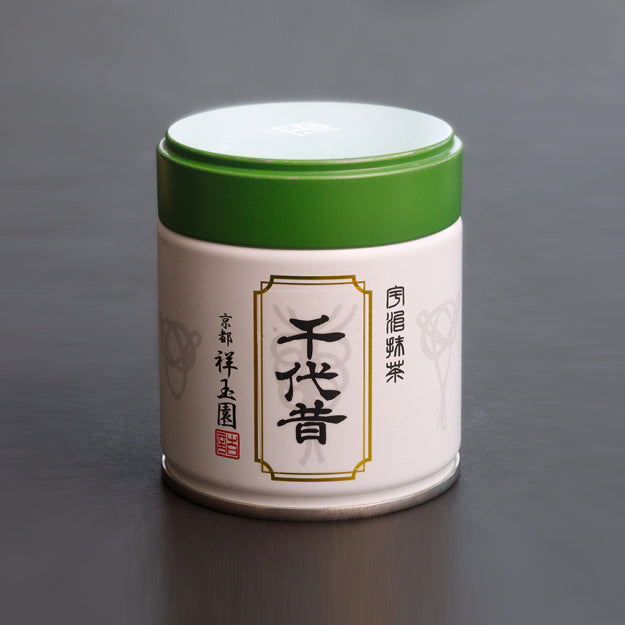
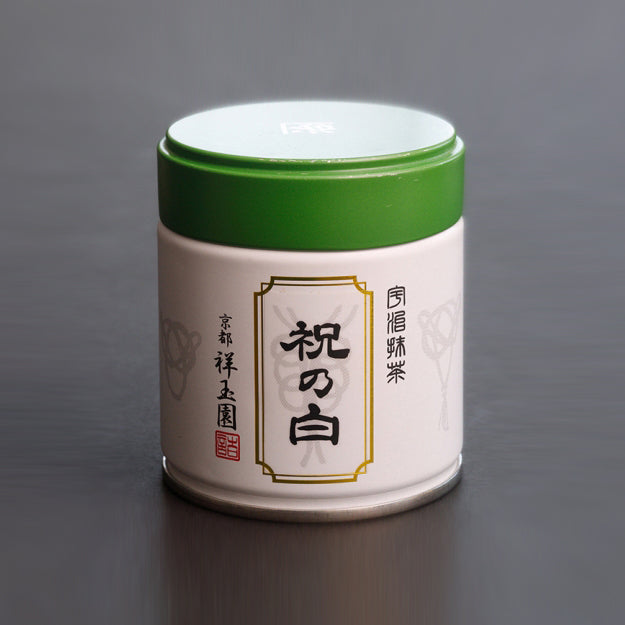
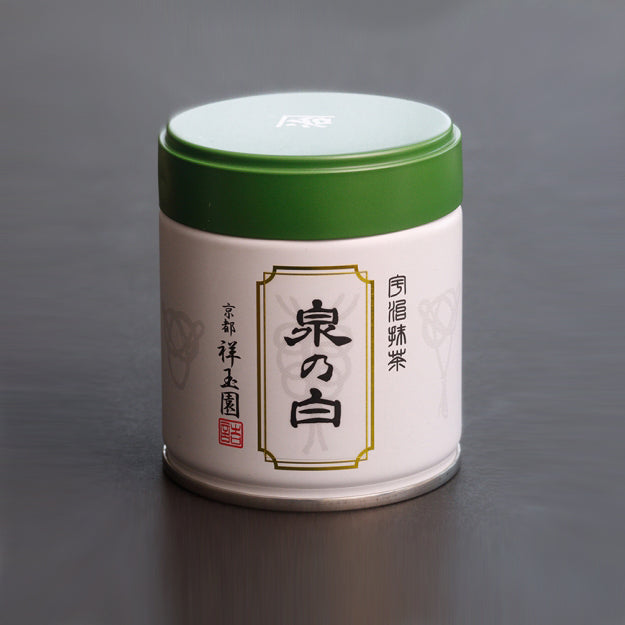
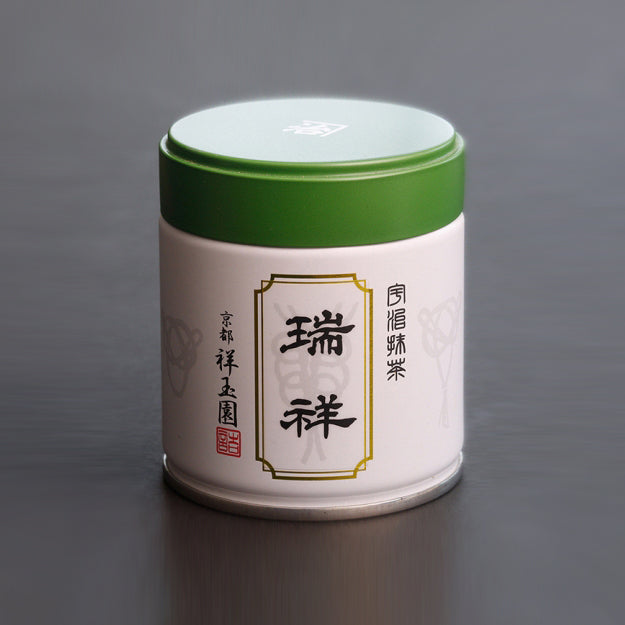
At Gusta, we have chosen five grades from this range — #1 Zuisho, #2 Kakuun, #4 Chiyomukashi, #7 Iwai no Shiro and #8 Izumi no Shiro. We intentionally carry more than one level because part of appreciating Shogyokuen is experiencing that progression for yourself. At the top of our selection is Zuisho (#1), an extraordinary matcha that we consider among the finest expressions of ceremonial Uji matcha available to Canadian tea drinkers.
Award-Winning Uji Tea
Shogyokuen’s reputation is also grounded in formal recognition within Japan’s tea industry. The house received the prestigious Minister of Agriculture, Forestry and Fisheries Award in the tencha division in 2006 — particularly meaningful for matcha, as tencha is the leaf material from which matcha is stone-ground. Shogyokuen later achieved first place in Japan for gyokuro in 2013, further reflecting the depth of the family’s expertise across Japan’s most highly regarded shaded teas.
These distinctions are part of why Shogyokuen holds a different place in our tea selection. Gusta does not carry the house simply because matcha has become popular. We carry it because it represents what becomes possible when nearly two centuries of Uji tea tradition, rigorous professional appraisal and generations of blending knowledge meet in a single bowl. For someone encountering Shogyokuen for the first time, the opportunity is not merely to drink high-quality matcha, but to experience the work of one of Japan’s deeply accomplished tea houses.